
Hair Transplant Density Expectations
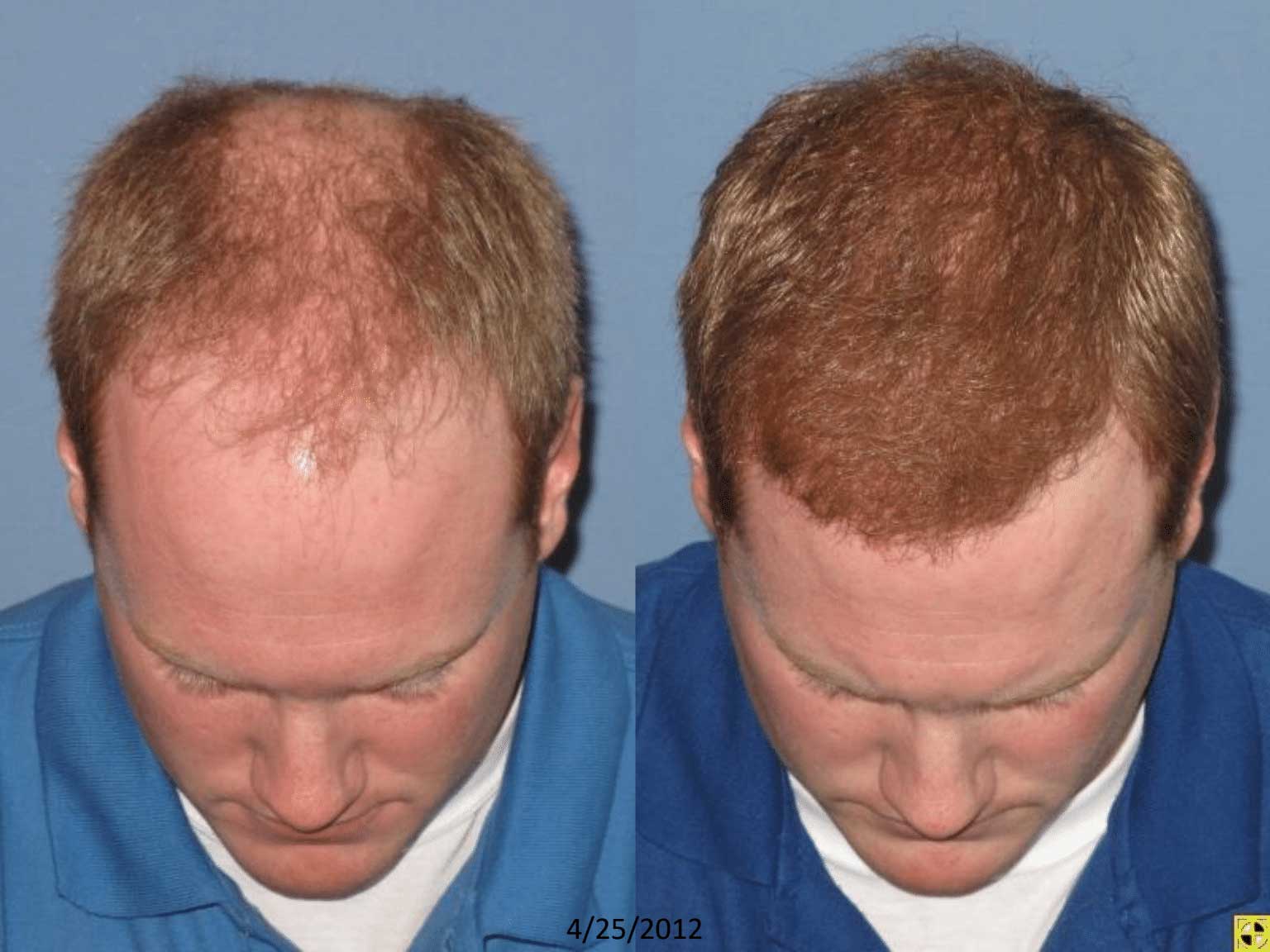
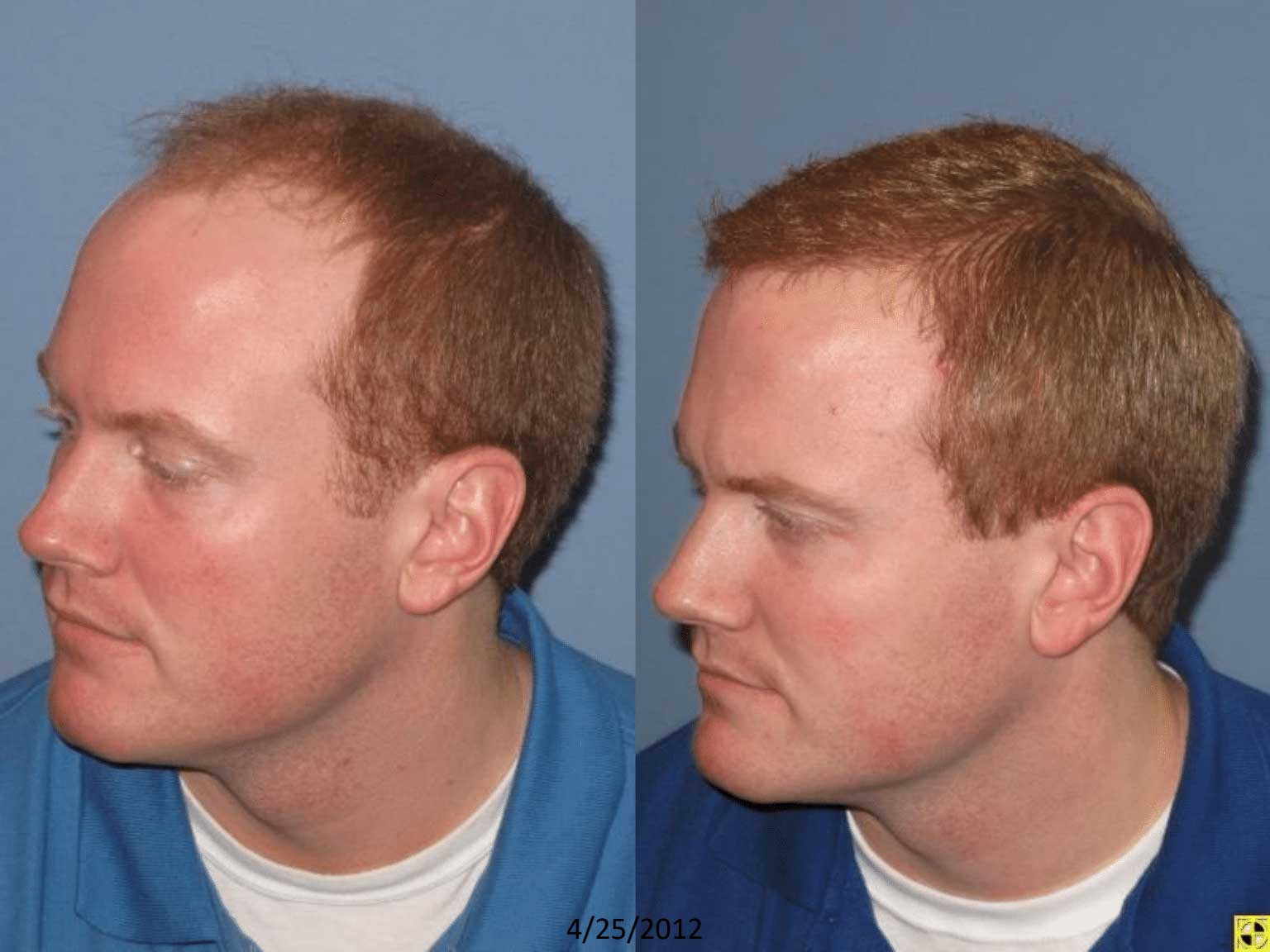
Meeting a patient’s expectation of density is the second most important goal in hair transplantation right behind naturalness. What a patient wants to know is how much area can be covered and how thick it will look. The answer to these questions varies extensively depending on a number of factors. The good news is that if a patient is a good candidate, meeting expectations of density can be achieved.
However, meeting density expectations can be difficult due to the constraints of a limited donor supply. The amount of hair available from the donor area is limited and less than the amount of hair that originally existed in the recipient area before hair loss started. Therefore we can never recreate the true ”hair for hair”, density (hair/unit area) that existed before hair loss started. As a consequence, a critical challenge in hair restoration surgery is to create the best illusion of density at lower than normal densities.
Fortunately, this illusion of density or appearance of fullness can be created with much less than the original amount of hair. The maximum degree of density that can be achieved varies from patient to patient and is determined by many factors including: donor supply, current hair loss, future hair loss and hair characteristics (color curl and caliber).

Maximizing Hair Transplant Density
To achieve maximum density a physician must have the two distinct skill sets. First, he must have the skill to move large numbers of delicate grafts in a way that ensures the maximum survival and minimal waste of each precious hair. However, simply being able to move large numbers of hairs is not enough. Second, equally as important is to know how to move the hair in the most effective way possible. By effective we mean utilizing patterns, distributions and techniques that create the greatest appearance of fullness with the least amount of hair. Skill and experience in these two areas will determine if a surgeon is able to maximize the patient’s potential.
Shapiro Medical Group (SMG) is an expert in maximizing density as evidenced by the frequency Dr. Shapiro has been asked to lecture on this topic at international conferences around the world (See CV). Some of the specific factors that influence density are discussed in more detail in the sections below.

Implication of a Limited Supply of Donor Hair
There are many factors that influence the ability to create density but probably the most important is the relationship between the finite donor supply and the extent of current hair loss. It can be looked at as a matter of supply and demand (donor supply vs. recipient demand). If the donor supply was unlimited, creating density in hair transplantation would be a simple task and we could create a full head of hair on everyone. Unfortunately, this is not the case. The donor supply varies significantly from patient to patient and is usually less than the amount needed to restore bald spots or areas to the density that originally existed before hair loss started, especially in patients with extensive hair loss.
Luckily, for reasons that will be explained later, a very good appearance of fullness can frequently be created within the constraints of this limited donor supply. If this was not true, hair transplantation could not be done as successfully as it is today.
Most patients have enough donor hair to restore the appearance of fullness to the front two-thirds (excluding the crown) of a totally bald scalp. Many patients can also obtain some coverage of their crown to varying degrees. Unfortunately, there are patients that simply do not have enough donor hair to address their crown. And in extreme cases a patient may not be a candidate for hair restoration surgery at all. A similar situation exists with respect to hairline placement. Some patients need to keep a higher mature hairline while others have enough donor hair to be more aggressive and create a lower hairline. In general, if the donor supply is high and the severity of hair loss is low, good coverage can be provided in all areas of concern. However if the donor supply is low and the balding area large, the achievable coverage will be much more limited.
Implications of Possible Future Hair Loss
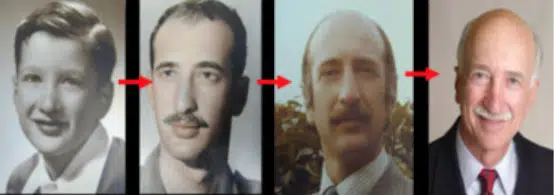
Another factor that influences density is future hair loss. Hair loss can progress at an unpredictable rate. Patients with mild hair loss today may have severe hair loss in the future. Physicians need to be careful to transplant hair in a pattern that will look natural not only today but also if the hair loss progresses and recedes away from the transplanted area.
Areas of thinning that improved when initially transplanted may become thin again in the future as native hair is lost. In addition, unnatural patterns may develop if native hair recedes away from transplanted hair as a patient ages. Patients need to be educated about the possibility of needing more work when hair loss occurs and progresses.
Why Future Hair Loss Matters
Physicians also have to leave enough donor hair in reserve to treat any possible progression. It is very hard to predict how severe a patient’s final pattern will be when they are young. Family history helps a little but is not very reliable. Probably the best predictor is the age and severity at which hair loss begins. A patient that develops significant hair loss at a very early age will most likely end up with severe hair loss while a patient that only begins to recede in his 40s or 50s will most likely have less severe pattern.
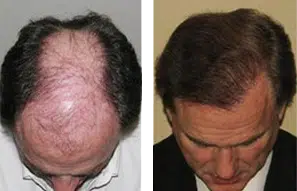
Patients that have the potential for severe hair loss or have more limited donor CAN do hair transplants. They just have to have more realistic expectations and create a plant that is more conservative and achievable with the amount of donor hair they have. Below is an example of a Type 7 patient who achieved a pleasing result by utilizing a proper conservative plan.
A clinic needs to estimate and take into consideration a patients potential for future hair loss when planning and predicting coverage. In addition, a clinic should try to minimize future hair loss as much a possible with the use of modern medications such as Rogaine and Propecia.
Implication of Different Hair Characteristics
The effect of Color, Curl, & Thickness
Curly hair and higher caliber (thicker) hair is more effective at creating the appearance of fullness because these characteristics increase the amount of hair surface area, in a given volume of space, that is interposed between the scalp and eye. This means the same amount of curly or thick hair will do a better job of hiding the scalp than thin straight hair. Although a physician can’t control thickness or curl, he does need to take these factors into consideration when predicting the results a patient can achieve. In addition, patients may be able to improve their look by using products or medications that will increase the thickness or curl of their hair. Propecia© and Rogaine© owe a lot of their effect to the ability to thicken all the existing hair on a patient’s scalp. By the same token putting a slight wave or curl in a patient’s hair may also increase the illusion of density.
Hair color also influences the appearance of density. We see the scalp through the hair partially because we notice the contrast between the color of the hair and the color of the scalp. This is very obvious with strong contrast such as with black hair and white skin. However, when there is a low color contrast between the hair and scalp (such as with light blonde hair on light skin) it is much more difficult to notice this contrast. This makes it more difficult to notice thinning and increases the illusion of high density hair. Products such as Dermatch© which color the scalp exert their effect in this manner. A physician does not have control over this factor but patients can color their hair or use modern medications such as Rogaine and Propecia.
Math and Optical Mechanics of Density
Why & When We Look Thin
Maintain a normal “appearance of fullness” until a patient loses approximately 50% of their original hair. This long-held and widely accepted dermatological concept was verified in a study by Dr. Manny Marritt who demonstrated that “parted” hair in a 1cm area did not begin to appear “thin” or to “widen” until approximately 50% of the original hair was lost. From clinical experience, the amount of hair that can be lost before hair appears thin will vary slightly between 40% and 60%.
A patient with very good hair characteristics (i.e. coarse, curly, light-colored hair) may maintain an appearance of fullness until he/she loses 60% of their native hair. On the other hand, a patient with poor hair characteristics (i.e. fine, straight, black hair) may begin to appear thin with as little as 40% hair loss. The take home message however is that same principle applies in reverse when surgically replacing hair. In other words, we only need to replace hair to approximately 40-60% of its original volume (depending on hair characteristics) to create an appearance of fullness. A corollary to this principle is that it is potentially ‘wasteful’ to replace a thinning area to greater than 50% of its original density. Replacing hair to greater than 50% of pre-hair loss levels will give only minimal aesthetic improvement and runs the risk of depleting the limited donor supply and depriving the patient of the ability to use the hair in other areas in the future.
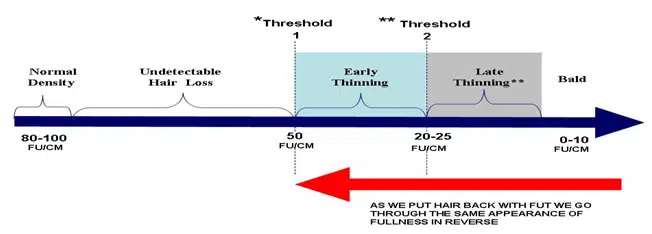
Appearance of thinning as we lose hair
The appearance of hair loss seems to change as we cross certain important thresholds. Beside is a description of the appearance of thinning that occurs as we lose our hair and cross certain thresholds.
Important Visible Density Threshold
Normal Density is usually 80 to 100 FU/CM2. Some patients can have higher or lower densities.
For most patients as they decrease from 80 to 50 FU/CM2 their hair still looks full under most situations. A patient does notice any thinning at this phase but, from a practical standpoint the hair loss is “undetectable”. Hair characteristics influence at what point hair loss will be detectable. Patients with very poor hair characteristics may notice thinning earlier at 55-60 FU/CM. On the other hand, patients with great characteristics may not notice the thinning until they have only 40 FU/CM2.
In general, our hair begins to look thin when we drop below ~ 50FU/CM2. This is the point when a person looks in the mirror one day and he wonders if his hair is looking thin and the next day it looks fine. This may be called the phase of “situational” hair loss because it is the point where the hair begins to look thin under different situations. For example, the hair looks full when dry but thin when wet. Or hair looks full in low light but thin under bright light. During this phase, people can do things to camouflage the thinning like blow dry their hair. As one moves from 50 FU/CM down to 25 FU/CM the number of situations during which the hair appears thin increases.
When a patient drops below 20 to 25 FU/DM2, they basically look thin all the time. They still look like they have hair but it is seen through all the time. When they drop below 10 FU/CM for all practical purposes they look bald.
Another concept that is important to understand is the concept of “social observation” vs. “critical observation”. A hair transplant that achieves a density of 40-50 FU/cm2 will achieve social fullness, which means that the patient will look full in most social situations. This includes casual observation from across the room to about a foot away. It is not meant to eliminate the ability to see any scalp under all “critical” observations which mean very close up, or parted. If one critically examines the scalp of people without hair loss, some scalp can be often seen. Patients who agonize about never seeing any scalp under any situation have unrealistic expectations about the purpose of hair transplants and will never be satisfied. A patient can be made to look full under most situations, but the scalp can be found under critical close-up observation.
Maximizing Graft Survival
Better Survival = Better Density
The evolution of tiny 1-4 hair follicular unit (FU) grafts was a breakthrough with respect to creating naturalness in hair transplantation. However, FU grafts created new problems with respect to creating density. FU grafts are tiny and delicate and therefore susceptible to trauma and decreased survival. Cutting and placing large numbers of these delicate grafts very close together without trauma is technically difficult. There are many points throughout the procedure (i.e. donor harvesting, graft preparation, recipient site creation and placing) where the grafts are vulnerable to trauma and decreased survival. It is very important to overcome this vulnerability as there are only a limited number of donor hairs and each one is precious. SMG has been at the forefront of developing and using these modifications. Many modifications in techniques have been developed over the years to improve FU graft survival.
- High Power Surgical Loops and Microscopes are used at all phases of the procedure including when harvesting a donor strip and creating grafts, doing FUE extractions, making recipient sites, and placing grafts.
- Specially developed FUE extraction Forceps that limits trauma when extracting FUE grafts.
- The use of Hypothermasolan advanced holding solution that protect grafts from dehydration and PH changes while they are waiting to be implanted.
- These tiny blades also limit the amount of vascular trauma that occurs to the scalp.
- The use of Liposomal ATP spray after surgery to supply oxygen and energy to grafts at their most vulnerable stage.
- Specially developed FUE punches that limit trauma transection during the FUE extraction process.
- Special Placing techniques such as the “Buddy technique” and “Stick and Place technique” which minimize trauma during the important placing step.
- The use of Custom Cut Micro Blades that perfectly match the size of grafts which makes placing the grafts much easier.
- The Use of ACELL Matrix applied to grafts during placing to increase the survival of grafts.
SMG has been instrumental in developing and lectured extensively on techniques that help maximize graft survival especially with dense packing and mega sessions (See CV). With the use of these innovations a skilled and experienced physician can achieve survival rates of above 90%.
Maximizing Graft "Effectiveness"
A Critical Skill
As stated before, there is only a limited amount of donor hair available for transplantation and in most cases it is not enough to create, hair for hair, the same mathematical density (Hr/Cm2) that existed before hair loss started. As a consequence, a major challenge in hair restoration surgery is to create the best illusion of density possible at lower than normal pre-hair loss densities. To do this, the donor hair has to be used as effectively as possible, utilizing patterns, distributions, and techniques that create the greatest “appearance of fullness” with the least amount of hair. Stated another way, equivalent amounts of hair can appear thicker or thinner depending on how effectively the hair is used to create the appearance of fullness.
The ability to increase graft effectiveness is a skill that separates an average from an expert hair transplant surgeon. Knowledge of how to do this enables the physician to get the most out of a patient’s limited donor. Factors that influence graft effectiveness include:
- Selective Distribution of different sized grafts to create the most effective patterns and distribution of hair.
- Graft Angle to create a shingling effect.
- Graft Orientation which refers to the use of either sagaitall or coronal incision.
- Hair Characteristics of color, curl and thickness
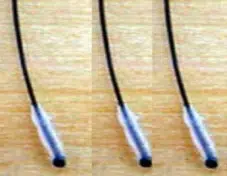

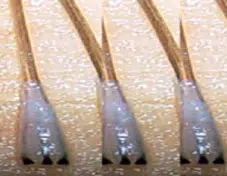

Selective Graft Distribution: A Powerful Tool
Different size grafts vary in their ability to produce naturalness and density. FU graft range from 1-4 hairs. It should be obvious that 3-4 hair grafts are more powerful tools for producing density and should be used in the areas where high density is critical. By the same token 1 hair grafts are less effective for producing density but much better for producing naturalness and should be used in areas where undetectablity and softness is needed. Selective distribution is a very powerful tool that helps us concentrate density in the most important areas. Grafts need to be selectively separated during the cutting process so they can be selectively placed during the placing process… If grafts are not selectively separated the physician loses a very powerful tool.
Graft Orientation
The Effect Of Coronal & Sagittal Incisions
Graft Angle
The Importance of The “Shingling” Effect
Hair naturally exits the scalp at an angle. It is important to follow this angle for a number of reasons. First, the natural angle will create a more natural flow and look. Second, following the natural angle when making incisions will limit transaction and damage to neighboring residual native hair. Preserving this hair adds to density.
Proper angling will create a “shingling effect” that increases the effectiveness of hair at producing density. The shingling effect that occurs when hair is placed at a more acute angle positions the hair in a manner such that more of the surface area of the hair lies between the scalp and the eye. It also causes the hair to overlap creating a greater illusion of density. In the past, physicians made the mistake of placing hair in a more perpendicular angle to the scalp. We know that the angle should exit the hair at an angle between 15 and 45 degrees depending on the location in which the hair is being placed. In the central area the angle is typically somewhere between 30 and 45 degrees, which matches the angle of the pre-existing hair in this location. In the hairline, the hair is usually between 15 and 25 degrees and in the temporal points or eyebrow area the hair is placed at a very acute angle of 0 to 10 degrees. Coronal incisions are a useful tool employed by SMG in areas where the hair has to be placed at the more acute angle less than 20 degrees such as eyebrows and temporal points.
Megasessions
Large Graft Session
As techniques have improved, so has our ability to transplant a greater number of grafts in a single session. Today the size of a transplant session can range from as little as 100 grafts to as large as 4500 (or more). The appropriate session size for a patient is determined by many factors (i.e. patient goals, degree of hair loss, presence of pre-existing hair, donor density, scalp laxity, etc).
There are some true benefits gained from larger sessions (faster results, less downtime, etc) However there are also some increased risks as well (poor graft survival, increased donor scarring, increased length of surgery, etc). With appropriate patient selection and the proper technique, the risks can be kept to a minimum. However, it is important to remember that patients are different and while some are good candidates for larger sessions others are better served with smaller sessions. At SMG we have the ability to do both large and small sessions depending on the situation. We evaluate every patient individually and choose the most appropriate session size for that patient.
Dense Packing
Placing Grafts Close Together
Today, grafts can be placed closer together than they could in the past. Grafts may be placed at densities ranging from as low as 20 grafts/cm2 to as high as 50 grafts/cm2 or more. As with megasessions placing grafts closer can increase the density created in a single session but also comes with some increased risk of poor growth. The literature shows that placing grafts at densities up to 30-35 grafts/cm2 will consistently produce survival rates of over 90%. Although successfully placing grafts at higher densities (40-50+ FU/Cm2) is possible, studies show that as the transplanted density increases beyond 40, the “potential” for poor survival also increases. With appropriate patient selection and proper technique, this risk can be decreased but not eliminated. The optimum density at which to plant grafts is a subject of controversy in the field and an object of much debate. At SMG we have the skill and ability to dense pack if and when appropriate.